
A FORGOTTEN TRIBE OR CLAN ON THE BORDER
The Youngs were one of the more prominent tribes or clans, as some may say, in the early records of the Scottish borderlands. They were first recorded in the Bowmont Valley, in East Teviotdale (Roxburghshire), where we find mention of an Adam Young as a witness to a land charter in the Bowmont in 1195 AD. The surname Young became common here first, then to some extent, spread to other areas of Scotland as did the Scottish version of the English language. By the 20th century, Young had become the 15th most common surname in all Scotland. The southeast border region was dominated by Angles, who spoke Old English, from which our surname originated. Since the time of their first recorded Angle king, Ida (547-559 AD), the use of the Anglo or English language was the rule in southeast Scotland.
In the year 1335 AD, we find Roger Yung, “a Scottish gentleman”, released by the English from imprisonment in the Tower of Berwick upon agreeing to keep the English “King’s Peace”. In 1353, we find William Young of Blakedene, in the Bowmont Valley, leasing a cottage in the village of Molle (or Mowhaugh) to a John Kerr. Moneypenny's Chronicle, published in 1597 and again in 1603, clearly lists the Youngs as one of the Scottish Border Clans. The Youngs were often accused of raiding into England and engaging in blood feuds with the English Border Wardens, as well as the English Selby, Heron, Ogle and Collingwood families. In 1596, Carey wrote of his greatest challenge, “This country has become almost slaves to the Scots, and dare do nothing displeasing to them. If the country rise upon them when they are stealing in England, and either kill one by chance, or take him ‘with the bloody hand,’ delivering him to the officer for execution, ‘if they be but foote lownes and men of no esteame amongst them,’ it may pass unrevenged: but if he is of a surname, ‘a Davyson, a Younge, a Burne, a Pringle or Hall or any thei make accompt of,’ then he who killed or took him is sure himself, and all his friends (specially those of his name) is like, ‘dearly to by yt,’ for they will have his life or of 2 or 3 of his nearest kinsmen, in revenge of their friends so killed or taken stealing here. ...”
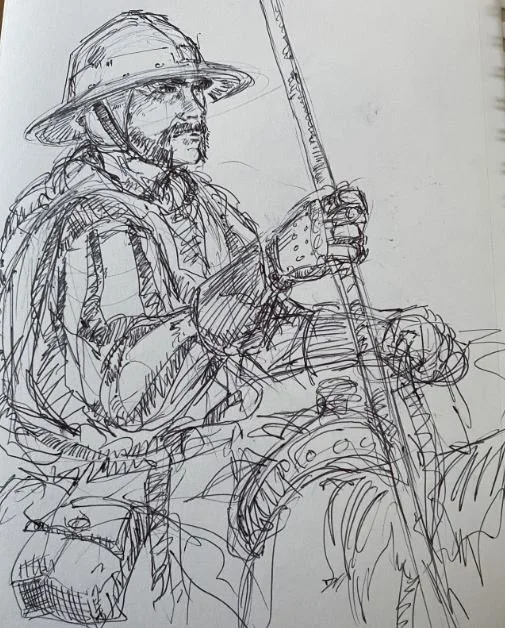
In the late fall of 1542, we find mention of the first “chief rider” of the Youngs, George Young of Otterburn. He was said to have led his small band of men to boldly harry an advancing English army at the beginning of the Wars of the Rough Wooing. He captured their commander’s chaplain and almost captured the English General, Edward Seymour, himself. The Youngs may not have been the largest clan, but estimates show they could muster between 200-400 armed men. They were a major player in the notorious reiving fraternity and the records contain an extensive list of raids on the English led by various 'Yonges', including such characters as Blackhall Jock, Hobb of the Bog, Hob the Gun, Tom the Gun and many others. They were also recorded as defending their homes against the English raiders and armies. Sir James and Dand Young, for instance, where both recorded as perishing in defense of their towers “for they would not yield” to the English.
For more details see our history book, Youngs of Scotland.